Know the origin
We aim to record where coffee comes from and who supplies it, then make origin and purchasing information accessible to customers and partners.
Coffee & Farmers · Our supply-chain vision
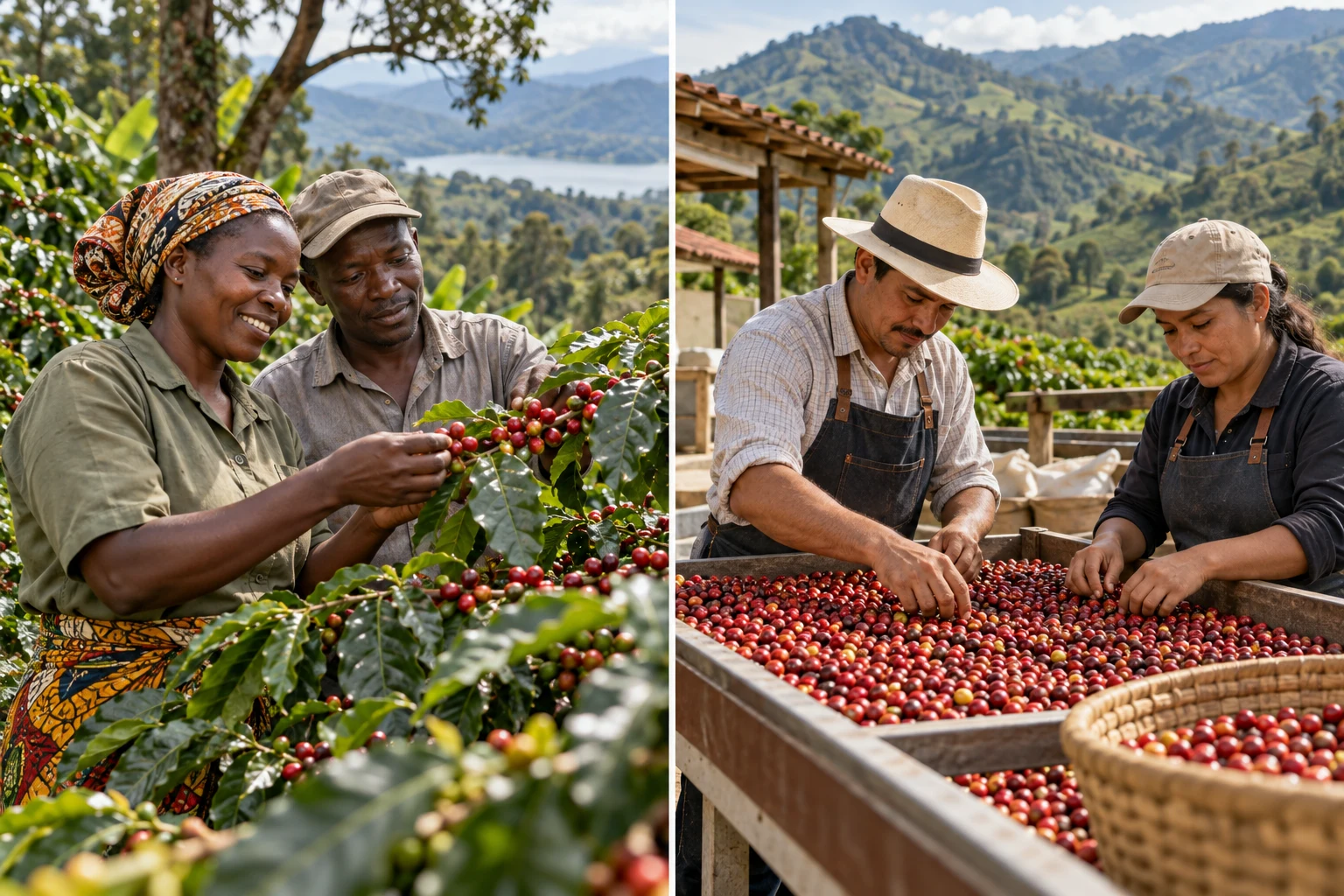
Great coffee begins with people. Our ambition is to connect every BeanbotiX coffee bar to a supply chain that respects growers’ work, supports stronger farm businesses, and gives communities a voice in their future.
A better world, together. One sip at a time.
Why we are different
Robotics is one part of our story. We also want the business behind each cup to create lasting value for the people who grow the coffee.
We aim to record where coffee comes from and who supplies it, then make origin and purchasing information accessible to customers and partners.
Our sourcing approach will prioritize dialogue with growers and cooperatives, clear quality expectations, and purchasing terms that recognize production costs.
We plan to report sourcing relationships and community support as they develop, including what was funded and what changed.
Africa & South America · The context
Uganda · East Africa
14,580 UGX/kgFairtrade’s 2025 reference for Ugandan organic Arabica is 14,580 Ugandan shillings per kilogram of dried parchment coffee. It is a modeled purchasing benchmark linked to viable farm size, sustainable yields, and production costs.
This is not a retail coffee price, an observed farmer income, or a BeanbotiX payment commitment.
Source: Fairtrade · 2025 ↗Colombia · South America
557,000 familiesIn its February 2025 production update, Colombia’s National Federation of Coffee Growers referred to 557,000 coffee-growing families. Coffee sourcing decisions therefore touch a substantial network of households and rural businesses.
This national figure describes the sector; it is not the number of farmers in the BeanbotiX network.
Source: FNC · February 2025 update ↗Regional examples explain why responsible sourcing matters. They do not imply existing BeanbotiX sourcing agreements or Fairtrade certification. Sources checked October 2026.
How we intend to help
We intend to discuss production costs, quality premiums, and relevant living-income benchmarks with sourcing partners. Better terms can leave more room to cover costs and reinvest; prices alone cannot guarantee a living income.
As the coffee-bar network develops, we aim to plan repeat purchases and communicate volumes and payment terms clearly. Greater predictability can help growers plan their harvest, cash flow, and farm investment.
We aim to support farmer-led priorities such as quality control, processing, farm business skills, and climate resilience through suitable local partners. Stronger quality and lower losses can improve the economics of a farm.
Our proposed model allocates 2% of positive machine operating profit to farmer development in sourcing communities and a further 2% to local community projects. Project priorities should be shaped with the people involved.
These allocations are a proposed policy, subject to final operating agreements and accounting definitions. They are not a fixed donation per cup. We will report allocations, payments, and outcomes as activity begins.
Accountability
Our goal is measurable progress: clearer origins, responsible purchasing, stronger relationships, and community-led work. As sourcing develops, we plan to share supplier relationships, purchasing practices, project payments, and documented outcomes. No farmer income increase is claimed at this stage.
Grower organizations, sourcing partners, and community collaborators are invited to help shape this approach.