Operations8 min readAugust 28, 2026
Running a 24/7 Coffee Station: What the Numbers Actually Say
After 18 months of live data from 47 BeanbotiX stations, here is what round-the-clock autonomous operation actually looks like in practice.
Daniel Osei
BeanBotix Operations
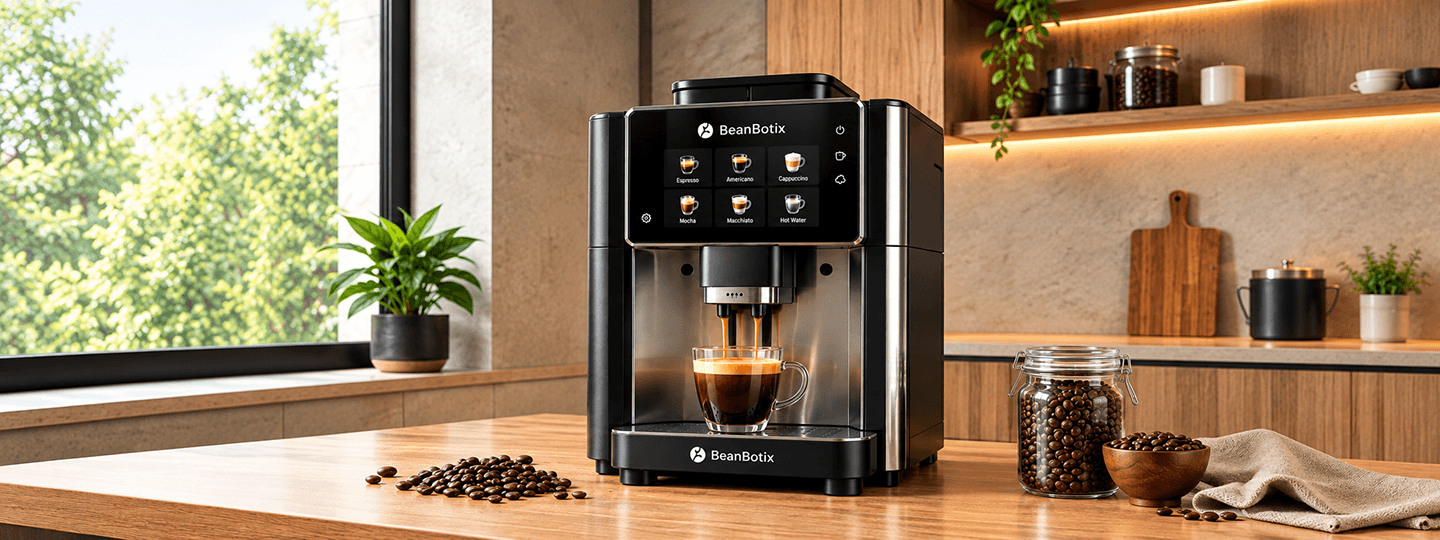
The pitch for an autonomous coffee station is simple: it never closes, never calls in sick, and never varies. The reality across 47 deployments is more interesting than the pitch, and the places it diverges are the places worth writing about.
Demand is not flat, and it is not the curve a cafe sees. Office stations show the expected 8am and 2pm peaks, but hospital and hotel deployments produce a third peak between 1am and 4am that no staffed counter would ever serve. Roughly 11 per cent of total volume happens in hours a human site would be closed.
Maintenance load turned out to be the number operators most consistently underestimated. Autonomous does not mean untouched: hoppers need filling, milk modules need restocking, and grounds bins need emptying. What changes is that none of those tasks requires skill or timing, so they collapse into an existing cleaning round.
The metric that surprised us was consistency variance. Across 2.3 million drinks, shot-to-shot variance stayed inside 4 per cent even as bean batches, humidity and ambient temperature moved. A staffed bar measured the same way sits closer to 15 per cent, mostly because different people pull differently.
None of this argues that machines should replace baristas. It argues that the hours nobody was ever going to staff are worth serving, and that consistency is easier to buy than to train.
- Operations
- Data
- Deployment
Published August 28, 2026